Filigree Wonders
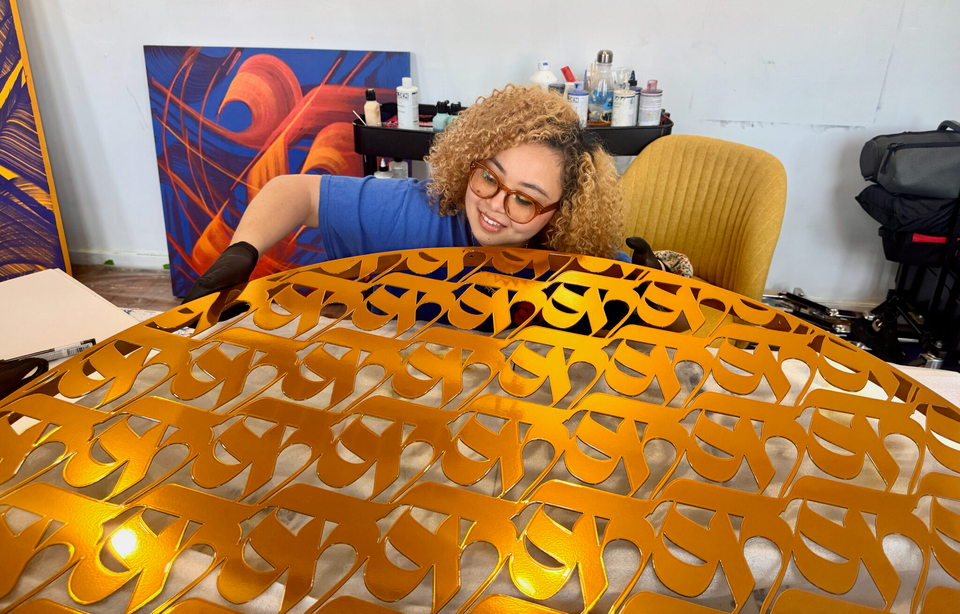
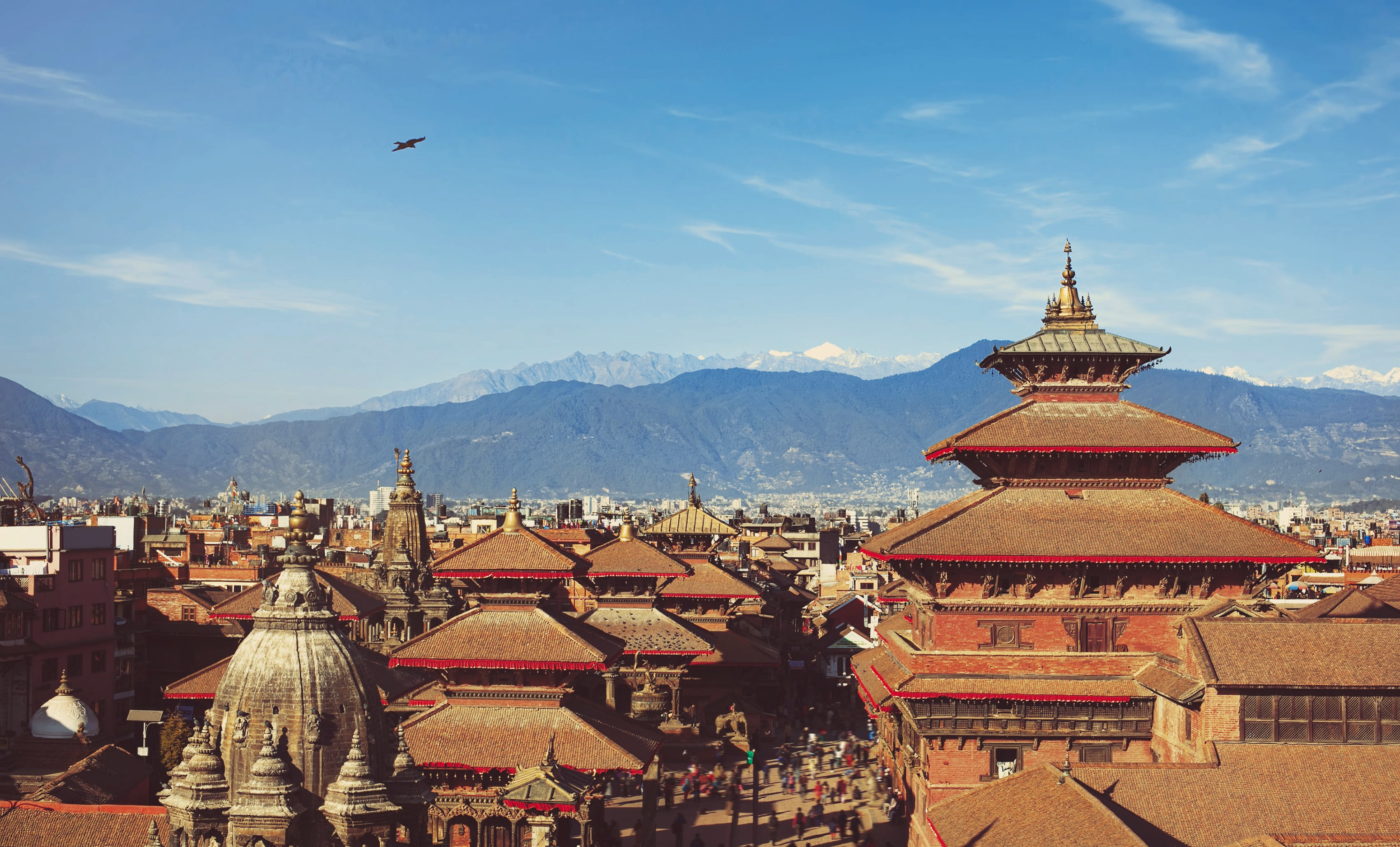
Growing up in Kathmandu, there are little temples strewn about everywhere in the city that are so ancient. To stop and pay respect to them—it’s part of everyday life. I thought, what if I created something that provided a moment of reflection, or a moment of refuge, or a moment of meditation for busy people walking through the intersection?
My Grand Plan
During the increasingly dark weeks that preceded the annual return of solstice light towards the latter part of December, I used my (mostly) solitary time to continue outlining a grand plan for this first, after-solstice, New Year’s Art Nun of Central Washington post. I was looking for a powerful and positive-spirited subject that would cancel out the endless negative stories of despair, hopelessness, greed, and destruction that filled every conventional news feed in great detail.
After encountering so much darkness at the end of 2025, for the New Year of 2026, I wanted to fill my world with the warmth of renewal and creativity. And since I had only a few tools available to accomplish this alchemy, I finally decided to make use of a medium I was already familiar with: the gifts that artists from diverse cultures and backgrounds have always offered to the world in many positive-spirited forms, even in the worst of times.
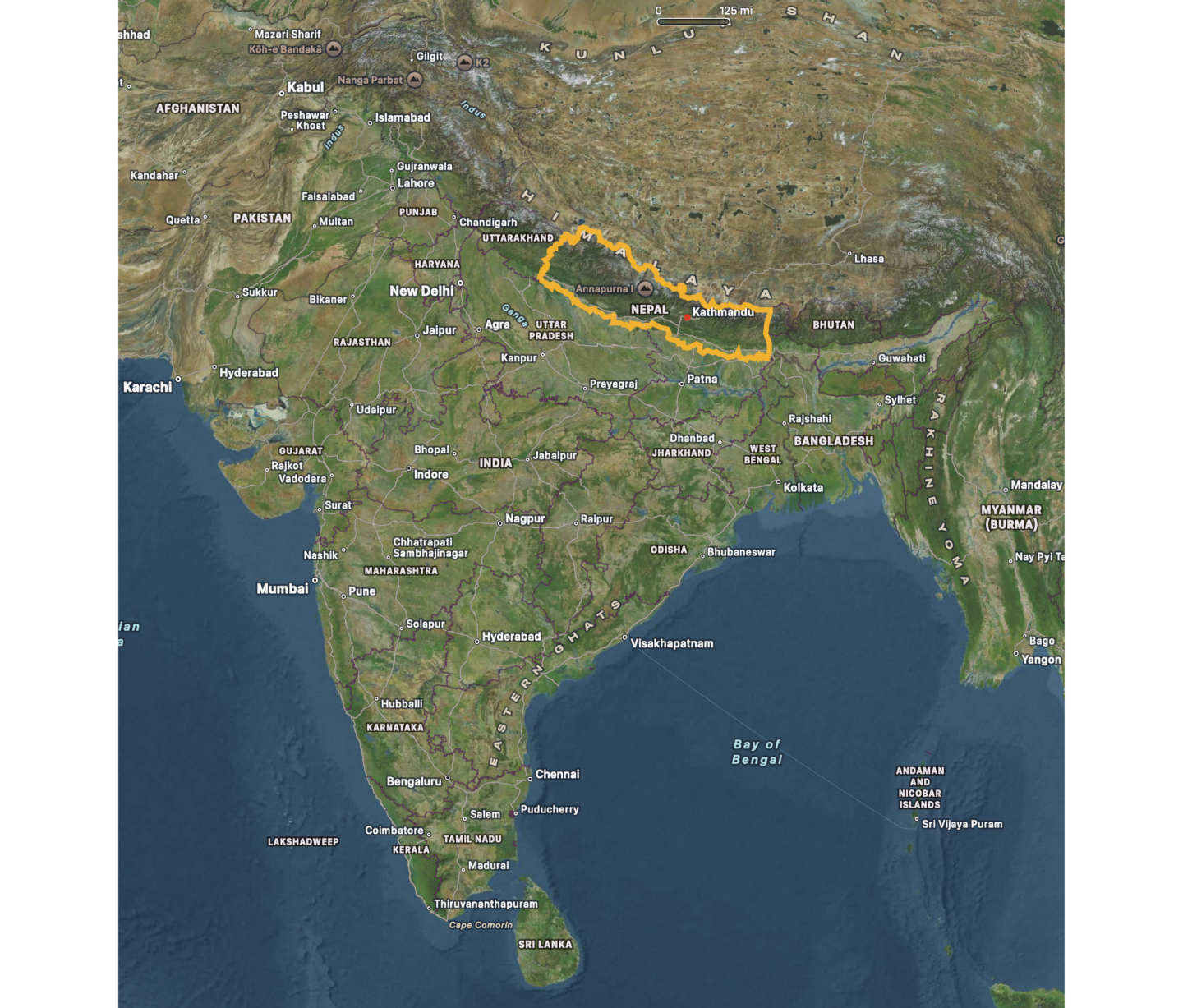
This post will introduce you to the extraordinary art of Nepali artist Sneha Shrestha, who is also known by her art name, “IMAGINE.” She is pictured above in the feature image of this post, figuratively pouring out the golden benedictions of her cast steel, filigreed archway for all to receive.
IMAGINE often combines her striking, large-scale calligraphic artworks with a spontaneous graffiti style that breathes the vibrancy of life into exterior murals, site-specific installations, and the interiors of museums. She is also one of the few contemporary artists I can think of whose work acknowledges and respects traditional Nepali spiritual values, which have influenced and inspired her own art.
My Awakening to Asian Art
In 1975, I received a surprise gift book from a friend, which introduced me to the work of a 17th-century Chinese painter and master calligrapher known as Tao-chi. The gift-giver must have sensed that I was finally ready to receive this visual treasure. The book combined large, color reproductions of Tao-chi’s exquisite brush paintings with examples of the varied and elegant calligraphy styles he chose to complement each one.
The book’s title was The Wilderness Colors of Tao-chi and it was a complete revelation for me. Its elegant beauty opened the way to further, self-directed explorations of the techniques, traditions and philosophies that have been embedded within the artistic traditions of China, India, Nepal, Tibet, Japan, and Indonesia for thousands of years.
Tao-chi's Visual Magic
Of all the art books I have in my extensive collection, The Wilderness Colors of Tao-chi is always the source I return to when I need comfort and quiet time for contemplation. And if I encounter a temporary barrier for moving forward with my work, I only need to re-read Tao-chi’s eloquent words to restore my spirit:
Employing brush and ink to write out the myriad things of heaven and earth makes my heart feel joyous.
— Tao-chi
The painting below encapsulates all the joyousness and love that Tao-chi felt for the beauty of heaven and earth. He created this depiction of peach blossoms in his later life, when his artistic powers were at their height, and included his own poem as a commentary about what he felt at the time. His vigorous calligraphy mirrors the physical structure, energy, and rhythm of the peach blossoms themselves.
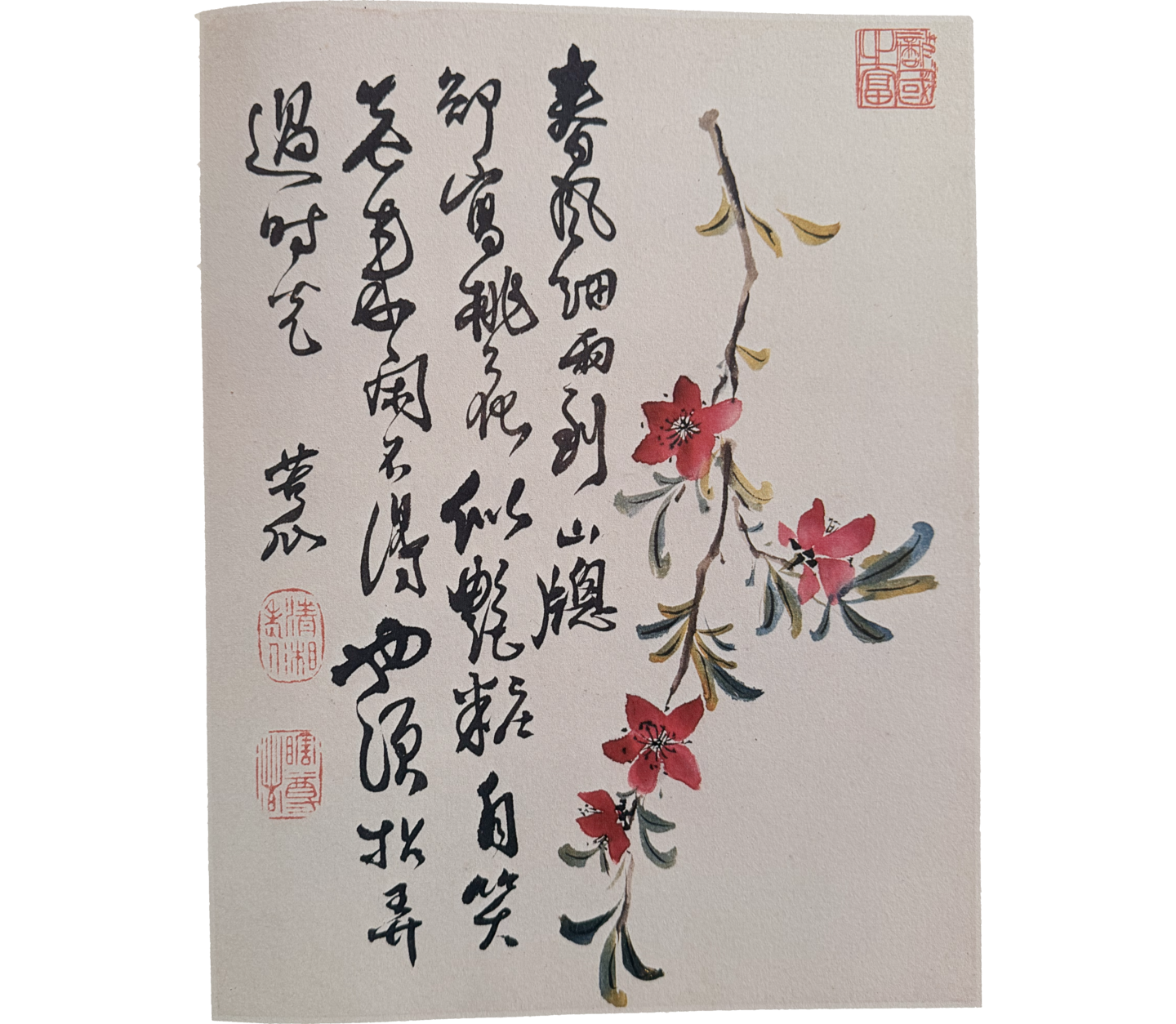
Spring breeze and gentle rain come to the window of my mountain lodge;
Even now I paint peach blossoms in their colorful attire.
I laugh at myself that in spite of old age I have not learned to live with leisure,
And must still play with my brush to pass the time.
Worlds of Inspiration
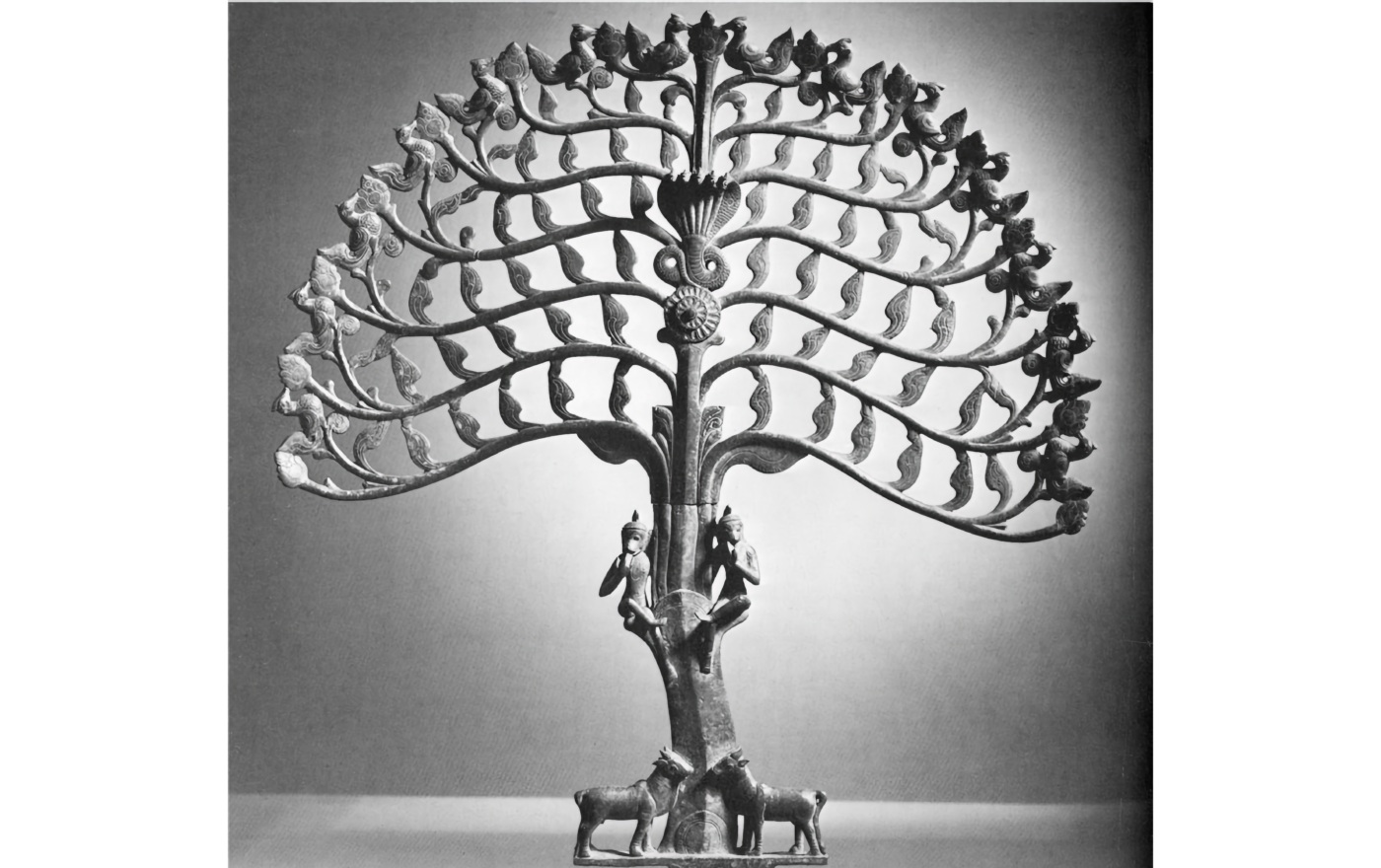
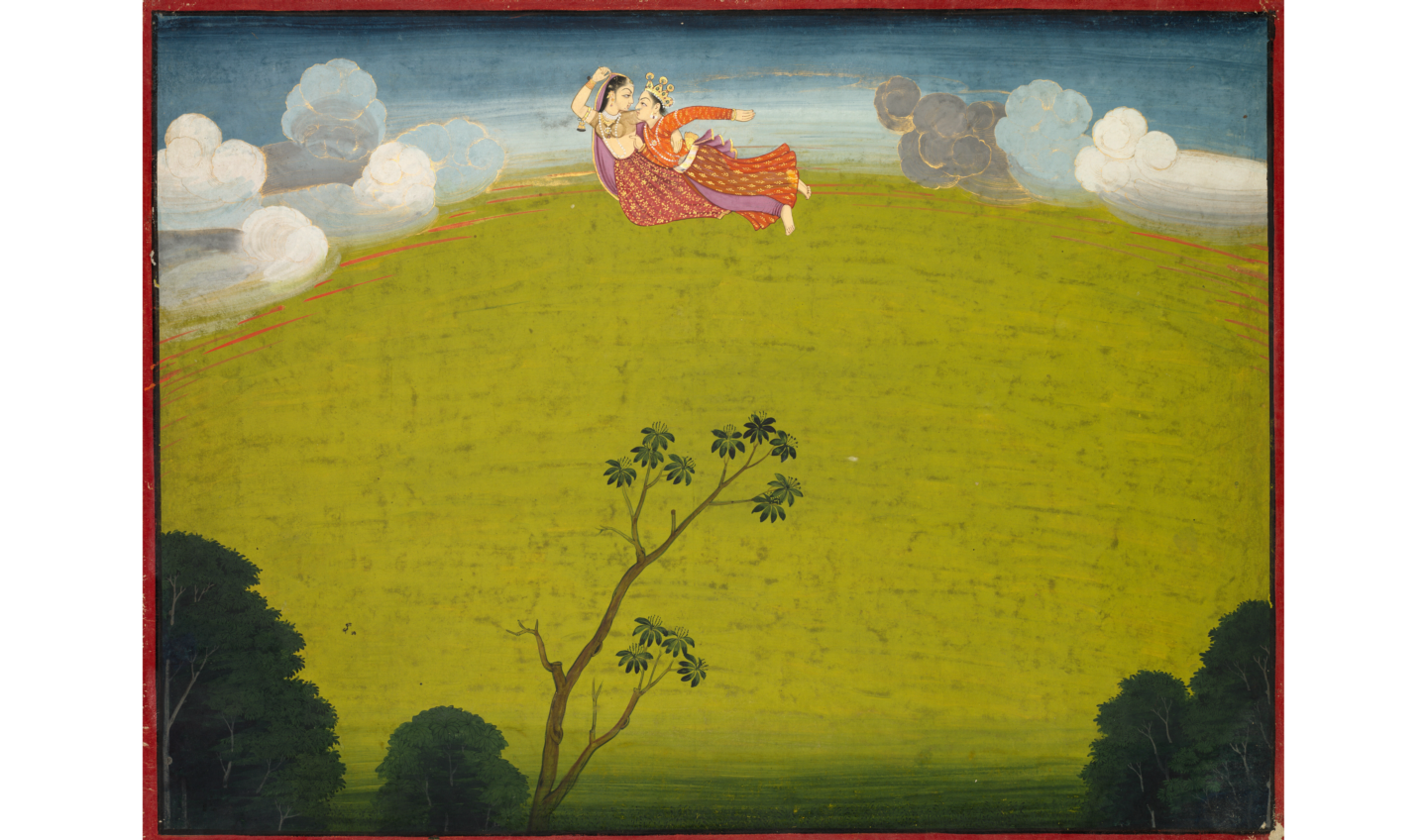
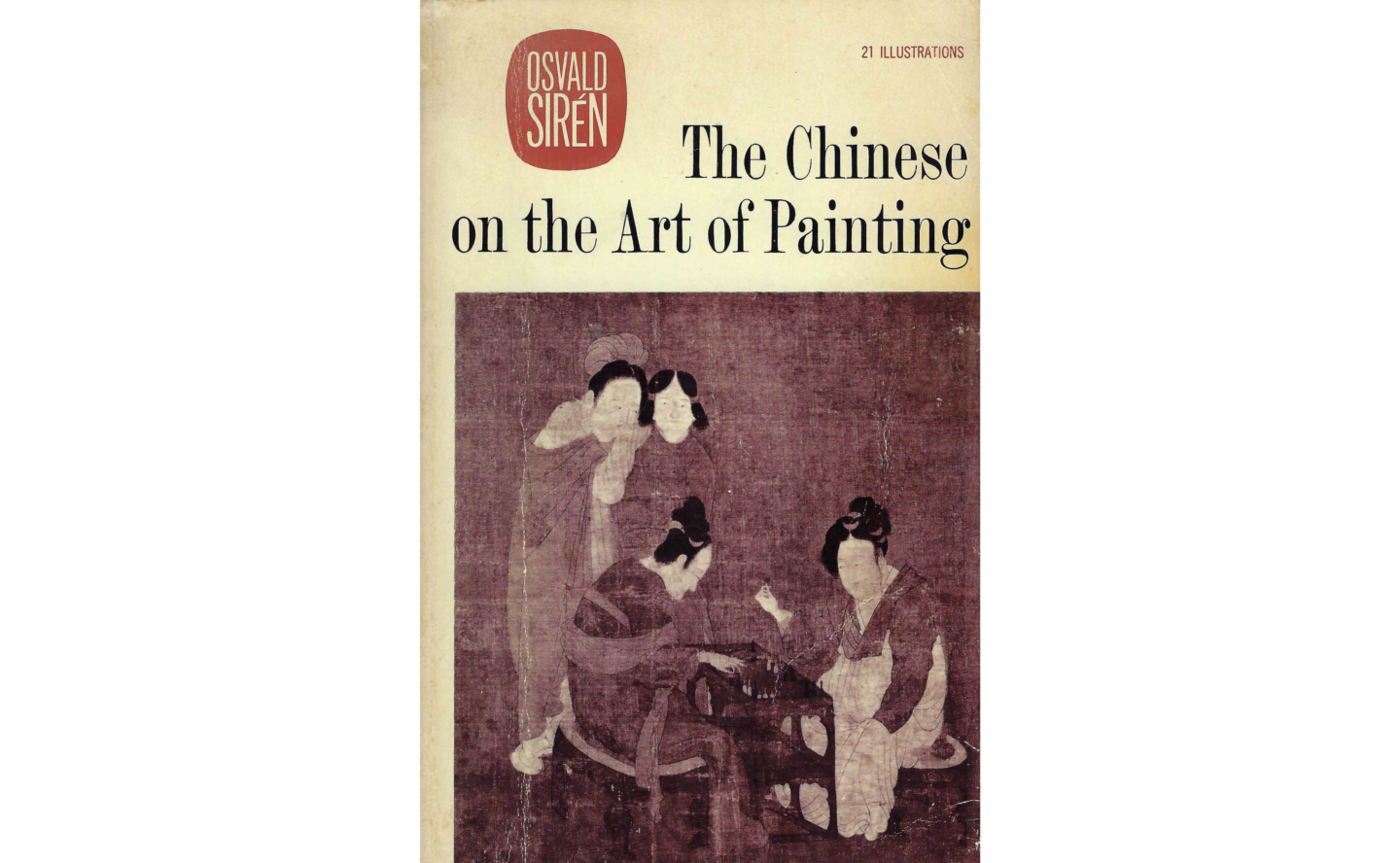
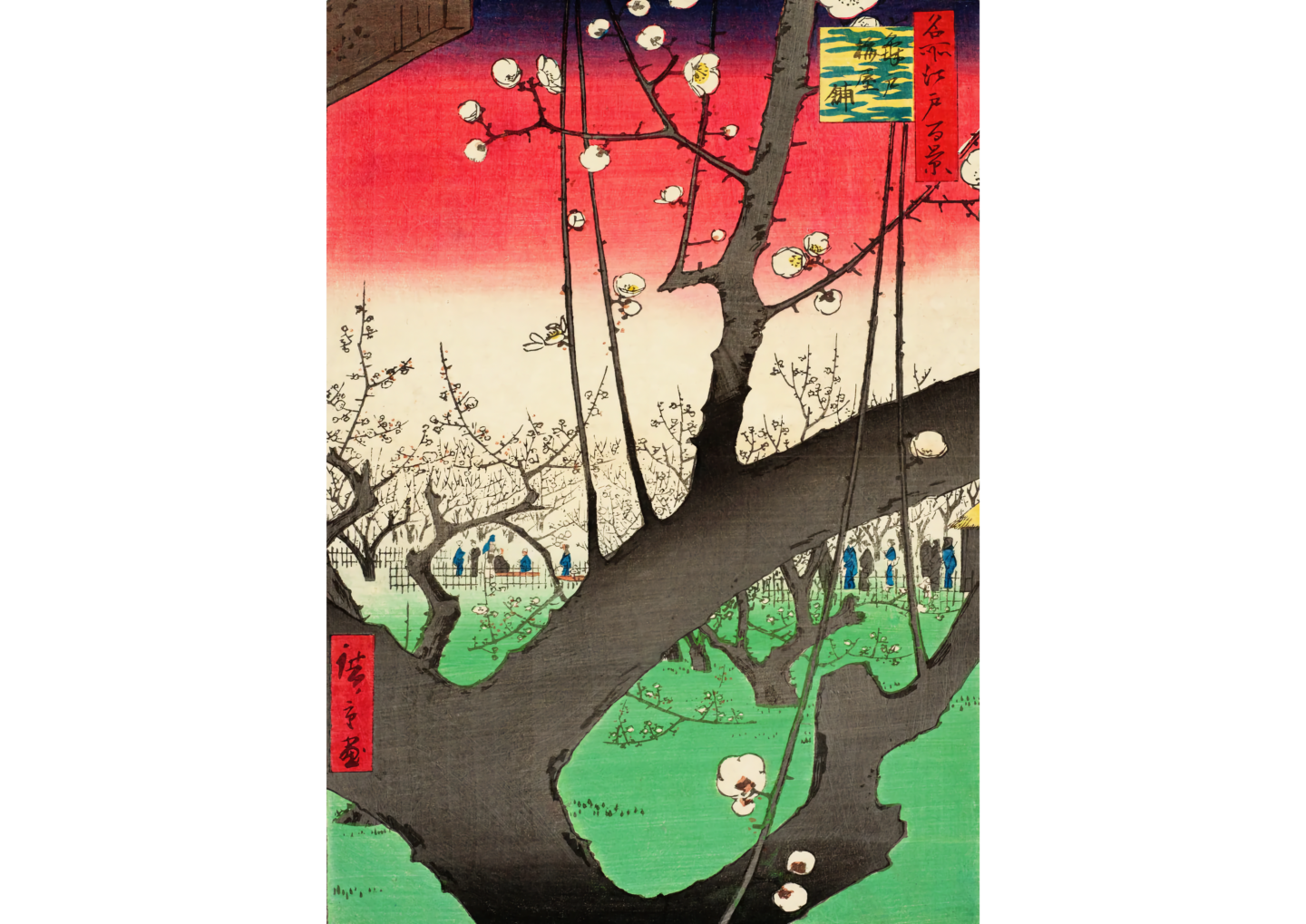
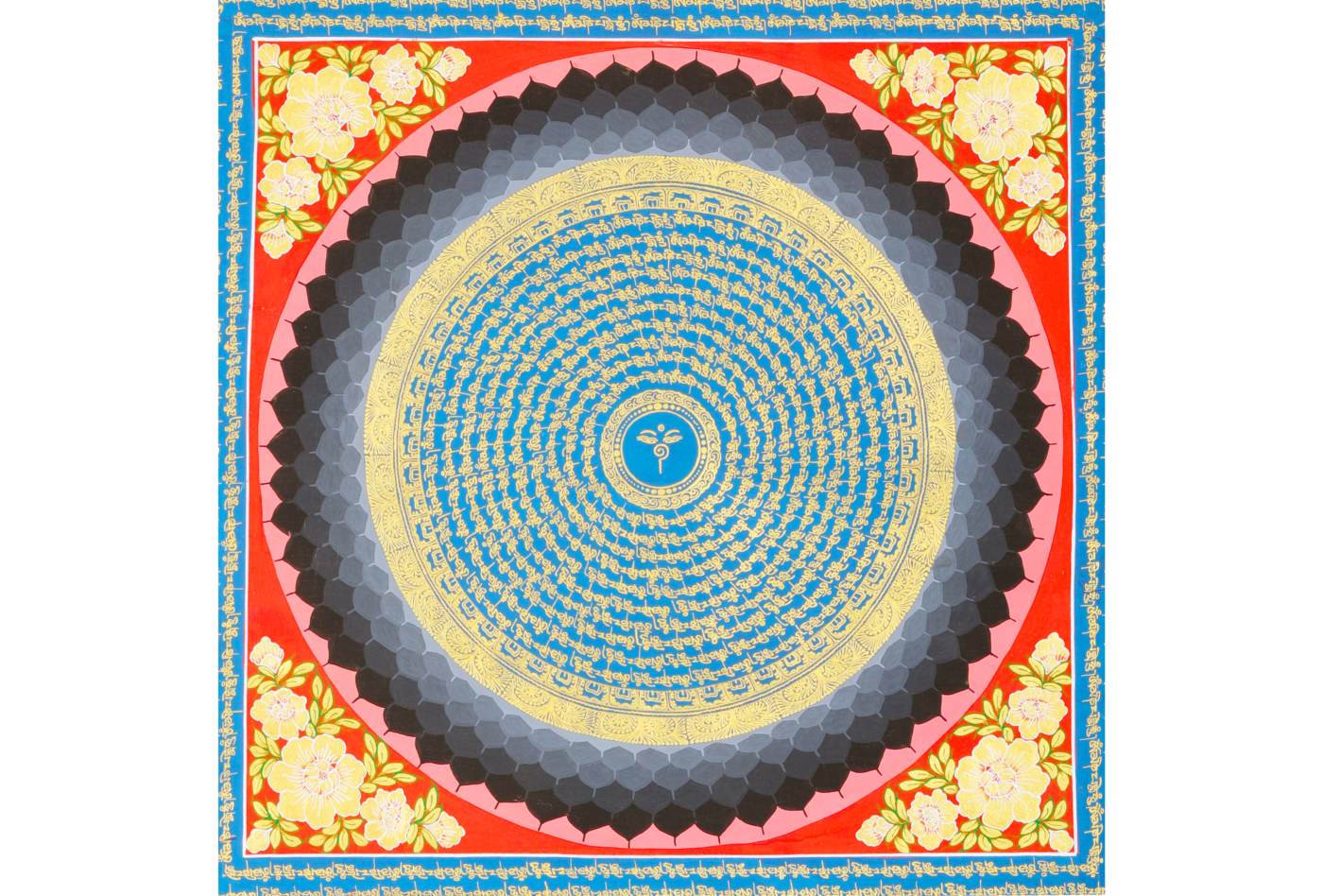
In the gallery of images below, I include examples of some of the paintings, prints, books, and sculptures that I carefully collected over many years, which expanded my ongoing appreciation of Asian art:
Imagine’s Early Murals
For Cambridge, With Love From Nepal
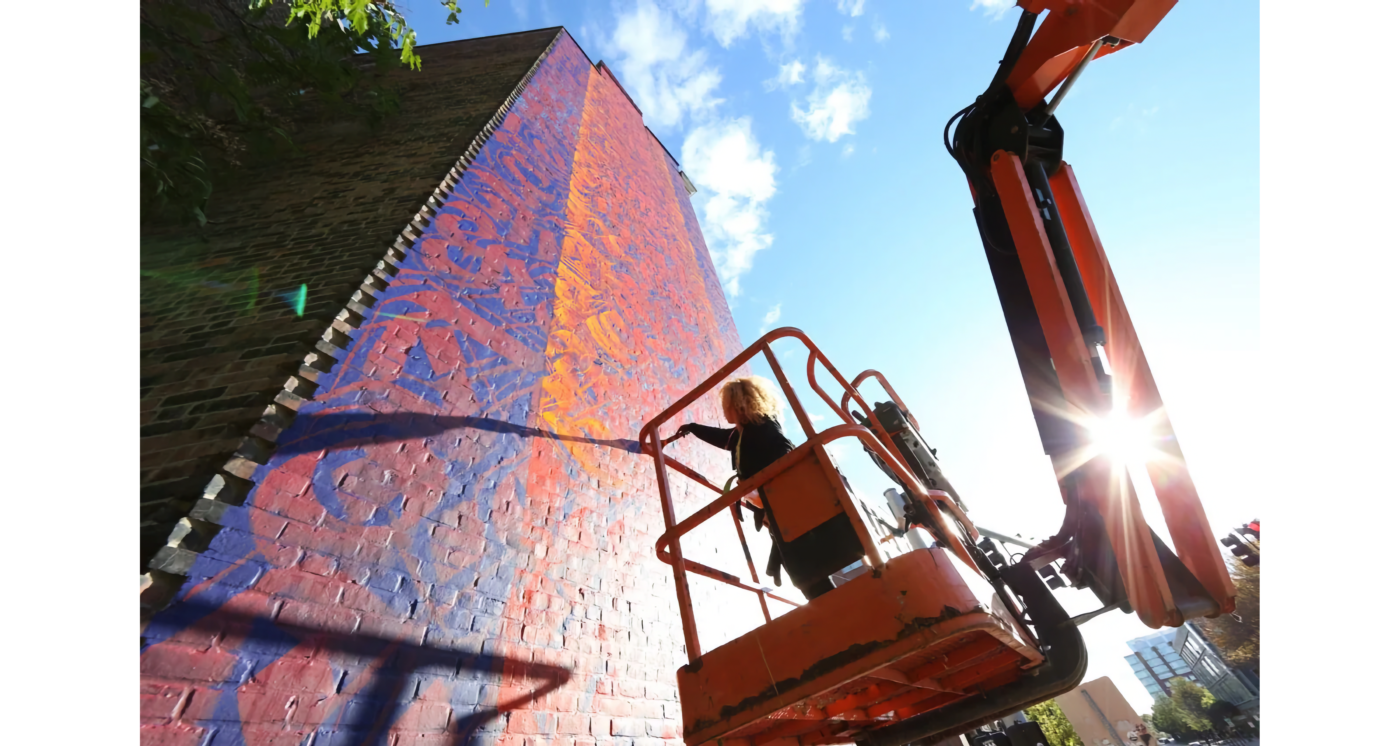
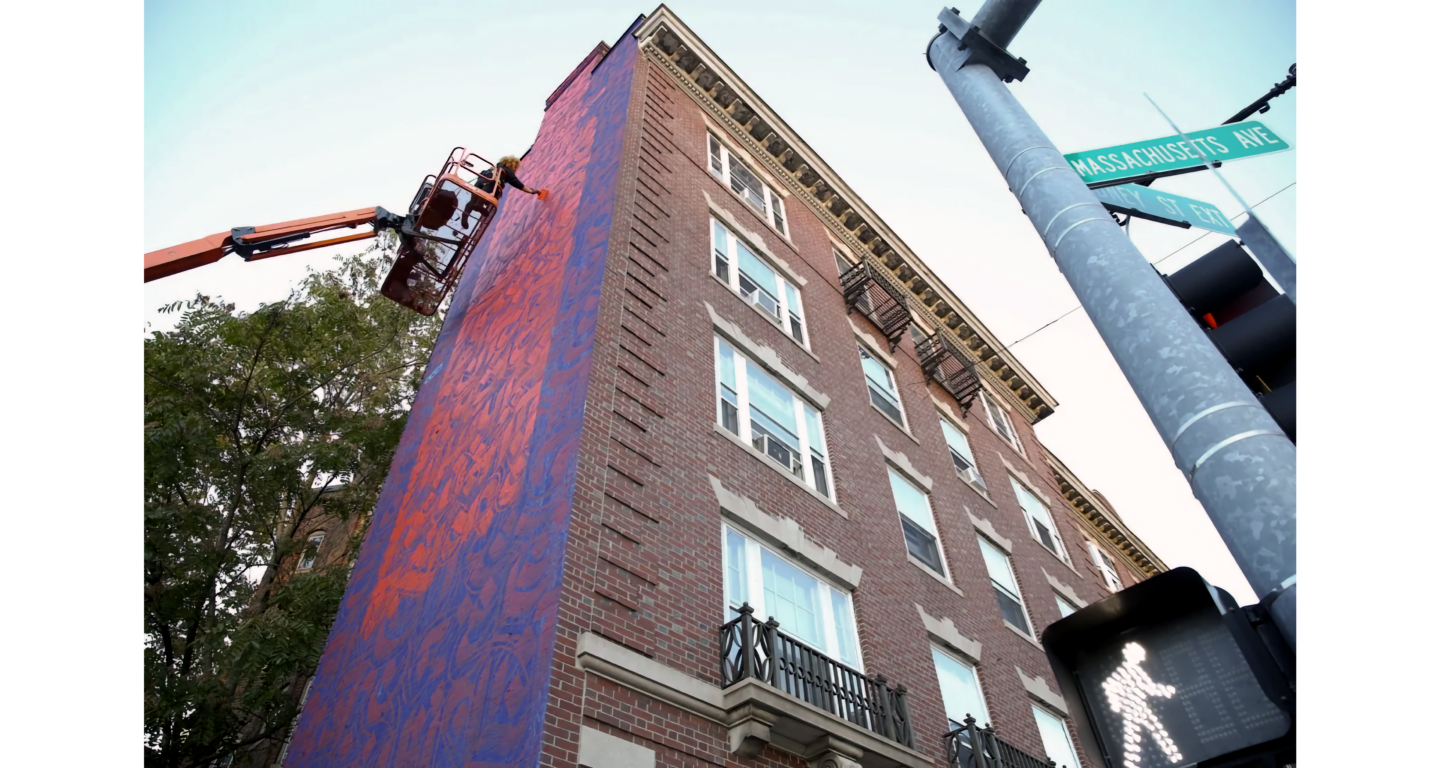
In 2018, IMAGINE created the first of several murals that incorporated her signature, large-scale calligraphy style. The title of her first mural was, For Cambridge, With Love from Nepal. Her colorful text design on the building’s facade transformed a conventional, multistoried brick building into a vibrant focal point for the surrounding student community. As an acknowledgment of the multi-ethnic identity of the Cambridge, Massachusetts neighborhood, IMAGINE included a succinct byline to her mural which reminded students that, “Success is what is in our hearts; not where we come from.”
The photos that document the painting of the mural show IMAGINE strapped into a tall, expanding boom lift basket for safety.
Food for the Heart
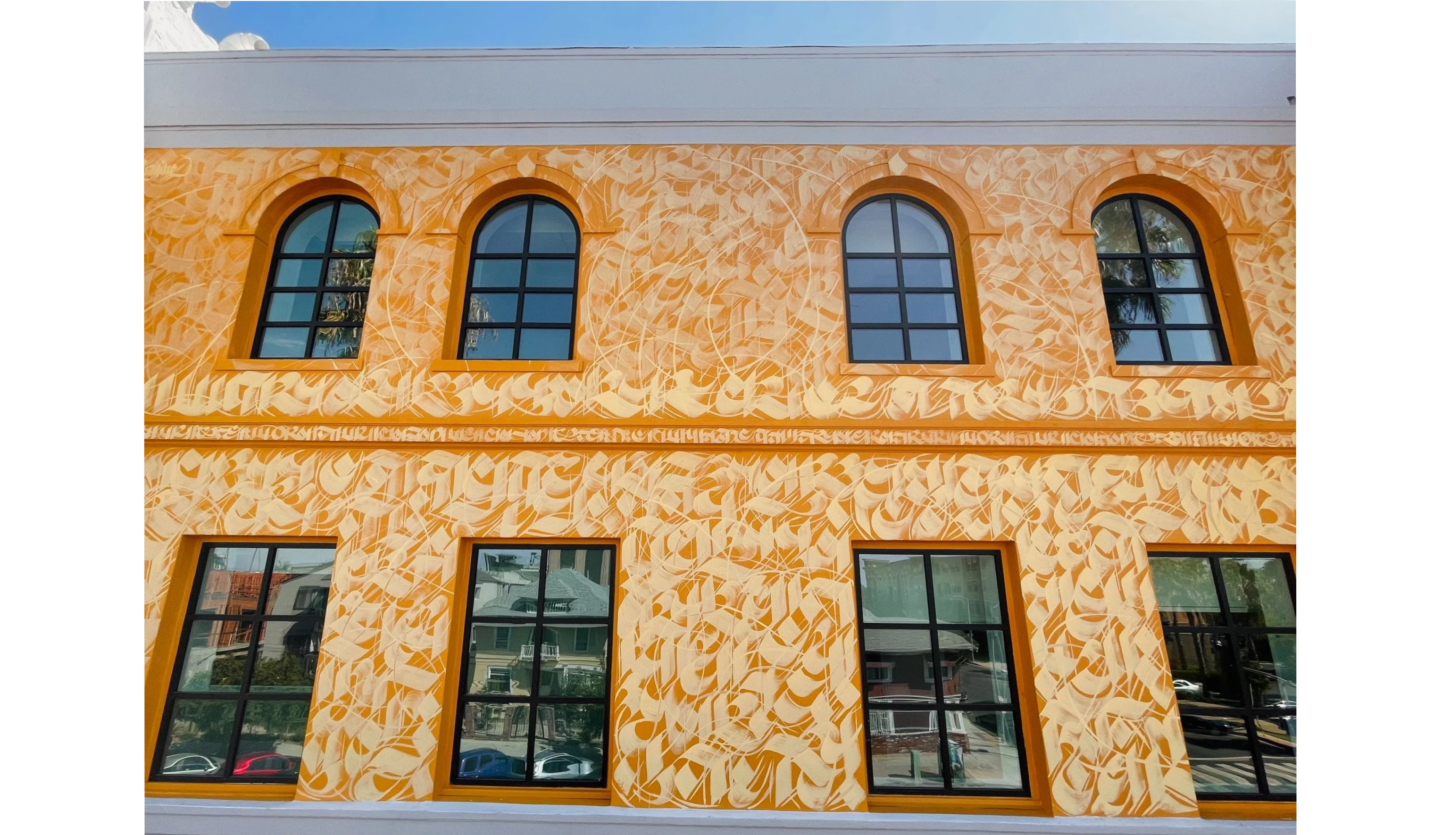
In 2020, IMAGINE completed another large scale mural titled Food for the Heart for a community kitchen complex in Long Beach, California, which brought the cuisines of diverse cultures together to share their tastes with others.
The gold-calligraphed building, used as an exterior “canvas” for IMAGINE’s work, features a protruding border ledge separating the two floors between the windows, inscribed with a rhythmic calligraphic text that lists the ingredients used in the preparation of a traditional Nepali “Dal” (a golden curry dish served with rice) spiced with the flavor of turmeric, one of Nepal’s most treasured condiments.
Protect What You Love
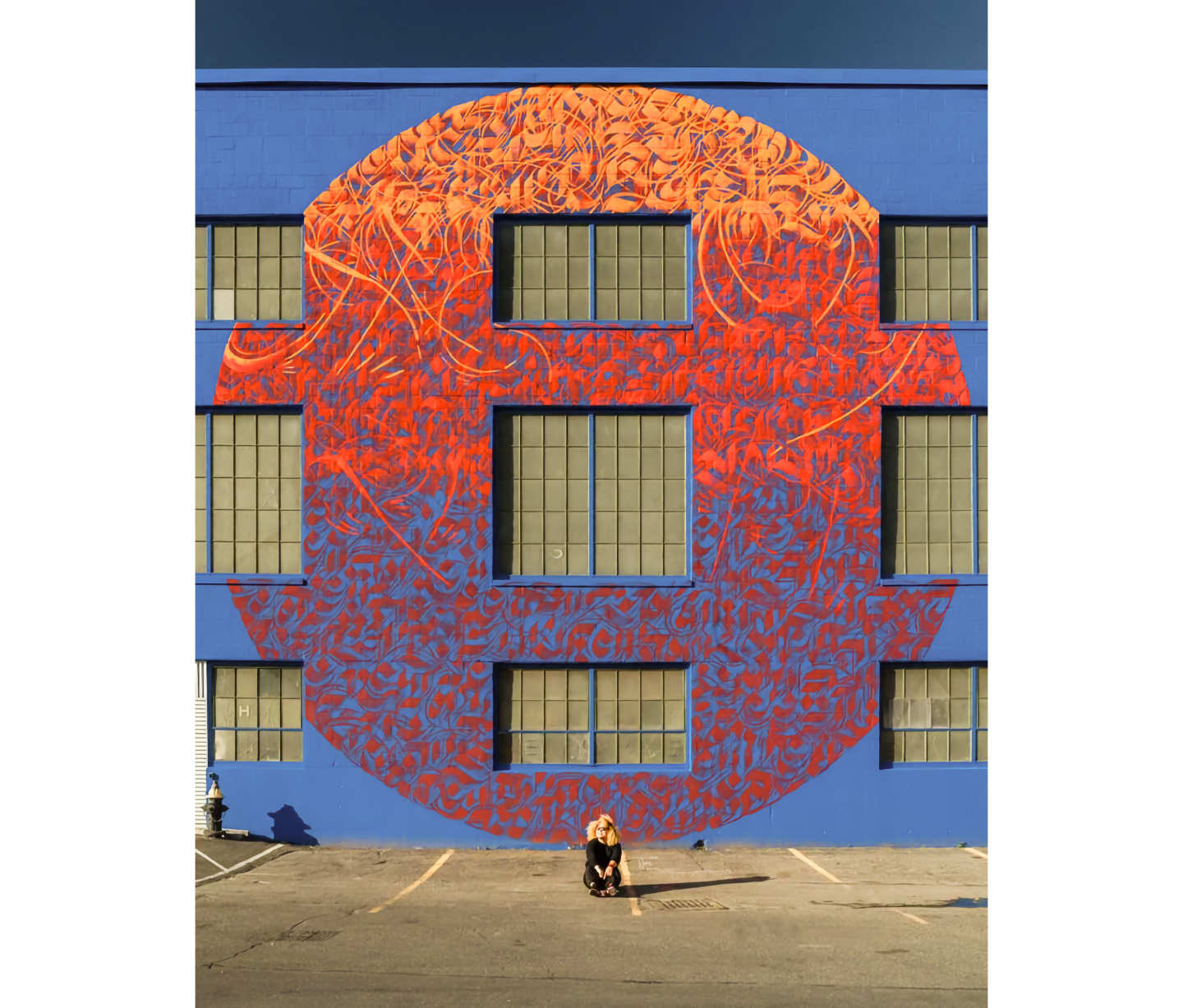
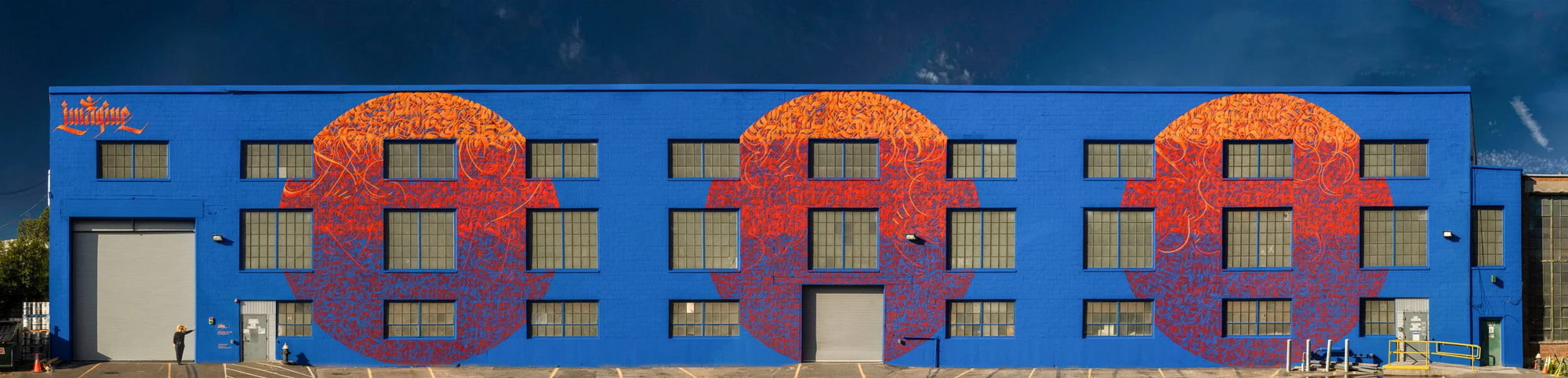
IMAGINE’S 2020 mural for an East Boston location was dedicated to the International Sea Walls Foundation to raise awareness about the oceans. IMAGINE wrote “Protect What You Love” as the repeating mantra for these three mandalas, not only to spread the message of taking care of the oceans, but to also raise awareness for the future coastal flooding in Boston that will mostly affect communities of color. IMAGINE’S mural also transformed the mostly white-populated waterfront to an area that felt more welcoming to the surrounding POC families.
IMAGINE’S First Public Art Installation

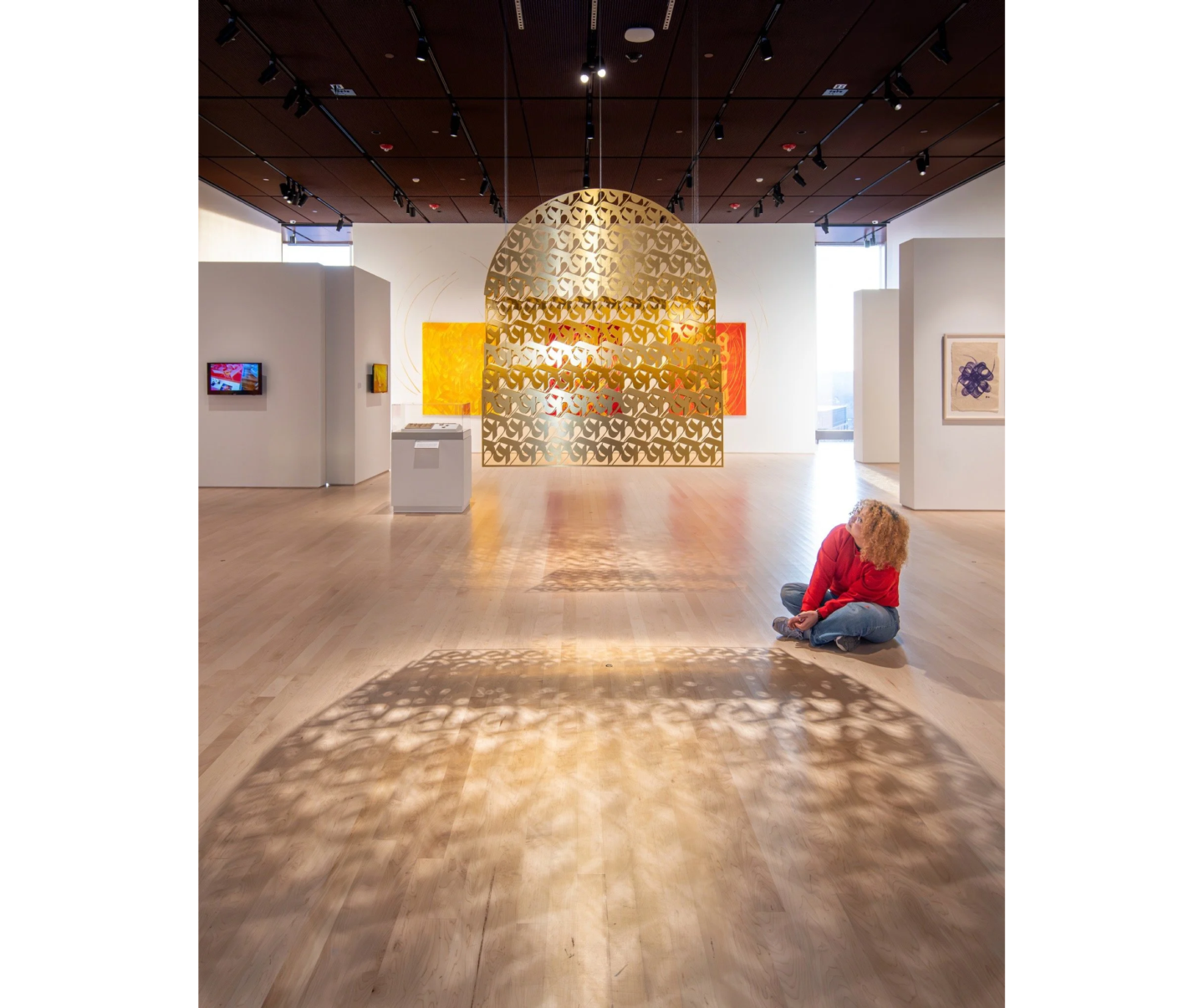
For her About a Living Culture installation, I was especially inspired by IMAGINE’s use of a ruffled, bright red cloth shawl (trimmed with metalic silver accents on the hem) that formed a protective covering over the curve of the installation’s arched filigree panel. The cloth covering subconsciously amplifies the meditative focus of the repeating rows of the Nepali alphabet’s first letter “Ka,” presented here almost as a visual mantra.
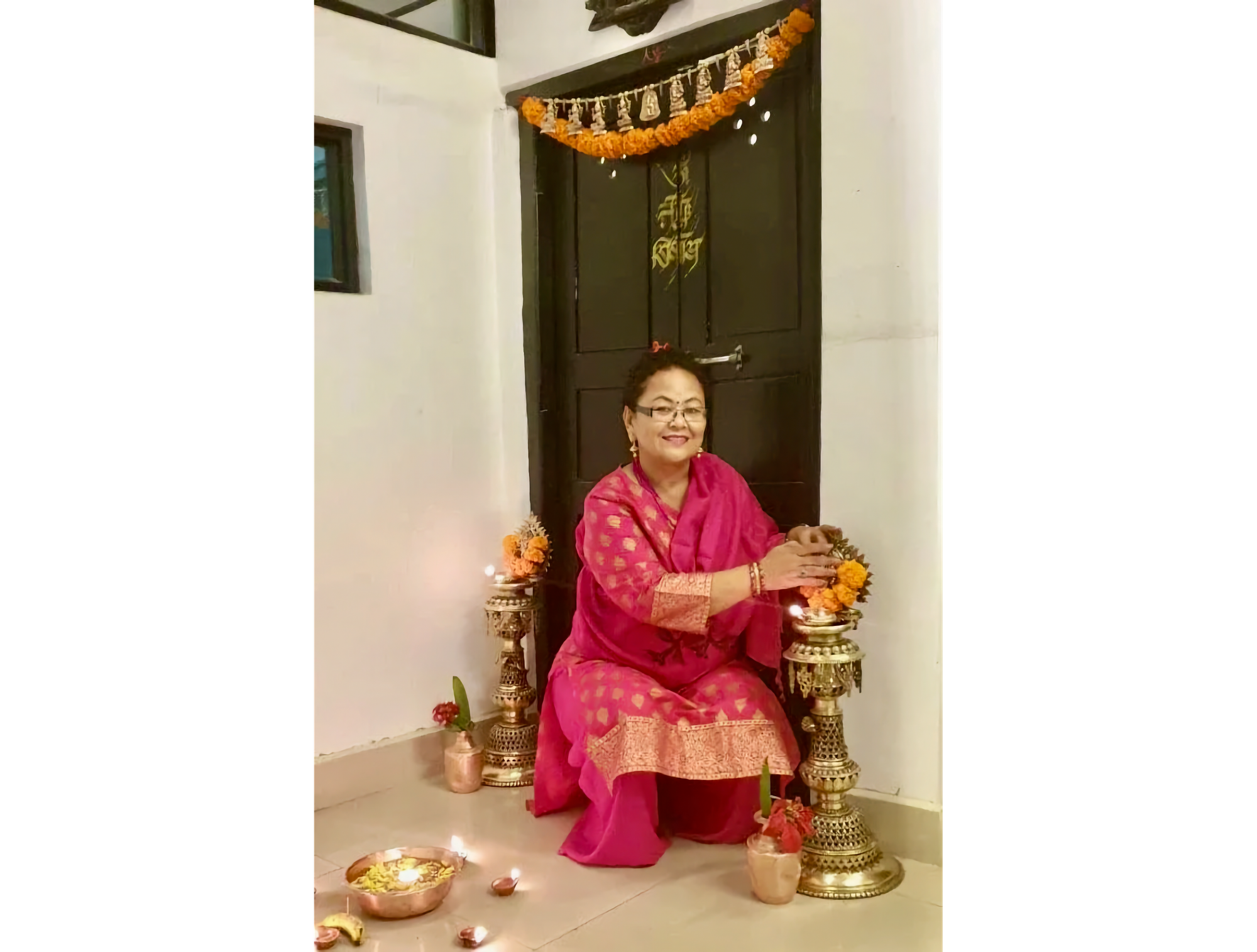
The overall effect of the installation reminds me of a photo that IMAGINE posted on her website, which shows her mother, dressed in metallic, gold-embellished finery, preparing to celebrate the Nepalese holiday of Tihar.
This sculpture is an homage to the Himalayan diaspora’s living traditions. Through the interplay of light, form, and script, it creates a contemplative space that honors ancestral roots while embracing the diverse narratives of Jackson Heights.
— IMAGINE
Mending and Moving
In the video below, IMAGINE describes her exhibit Mending and Moving at New York’s Rubin Museum, and talks about how it was presented.
The Rubin Museum in New York City
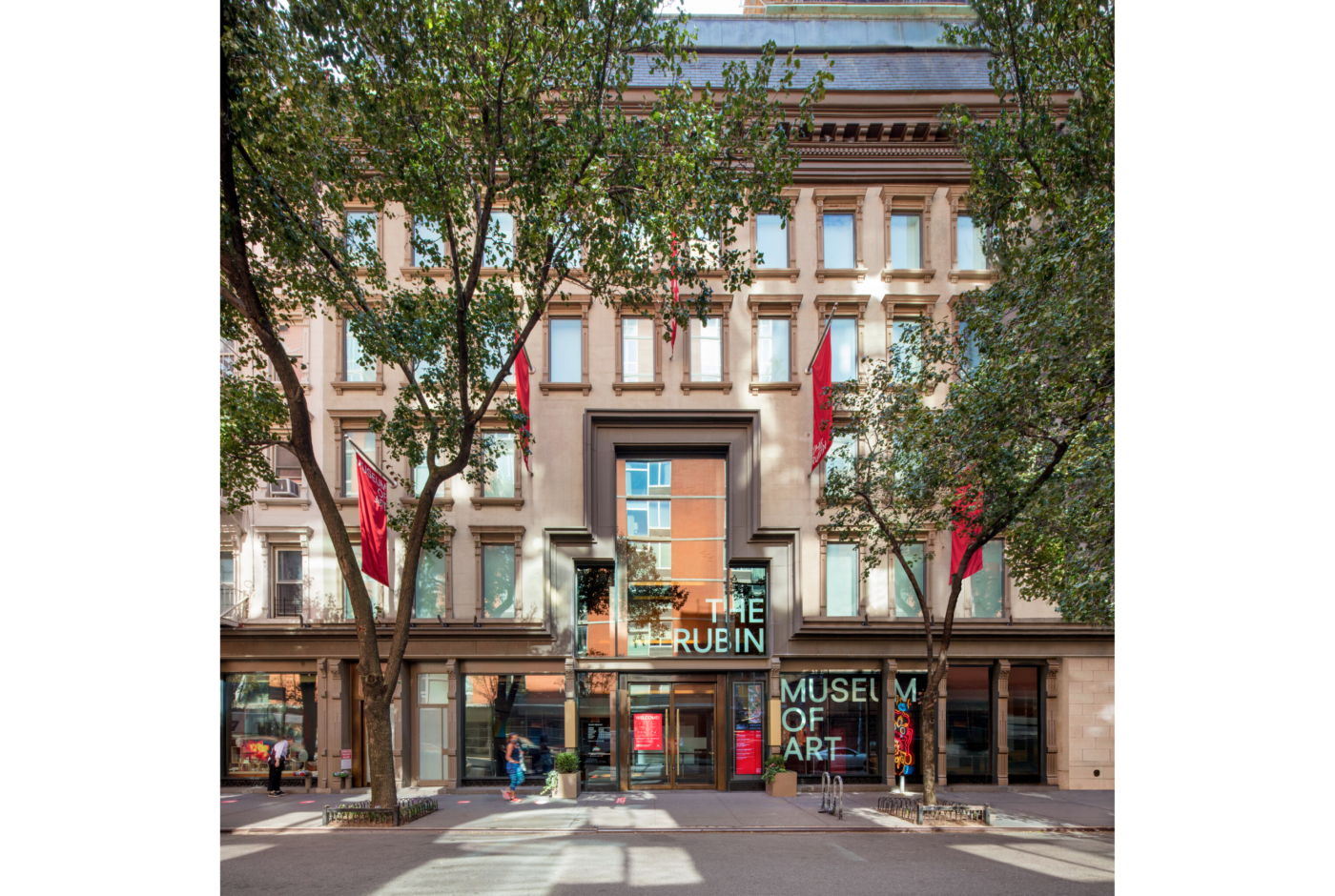
In the last year, I discovered the website of the Rubin Museum of Himalayan art in New York City, whose workshops, educational programs, and exhibits helped me fill in some of the remaining blank areas of my fascination with Asian art. Since I don’t live in New York, I relied on the The Rubin to keep me apprised of new developments in their programming through their online newsletter. Their digital outreach and community partnerships also inspired me to appreciate more contemporary Asian art (like IMAGINE’s), which has evolved from ancient artistic traditions.
A New Direction for the Rubin Museum
In January 2024, The Rubin’s executive director wrote a letter to the extended museum community discussing its future direction, which listed some key changes that the museum would be taking for the 21st century and beyond.
After careful consideration, the Rubin has decided to fully embrace the model of being a global museum without walls, which will serve the public locally, nationally and internationally…Ultimately, this decision will allow us to serve more people, digitally and in person.
— Jorrit Britschgi, Executive Director
New Year’s Day, 2026
As you may have guessed by now, IMAGINE’s personal philosophy and art has inspired me to think more deeply about my own goals for the future. And as I close this 50th Art Nun post on New Year's Day, 2026, I feel a great anticipation for the coming year. IMAGINE’s work has transformed me in unexpected ways, and I'm excited to see what the New Year will bring for my writing, my art, and my continuing interactions with the wider world.
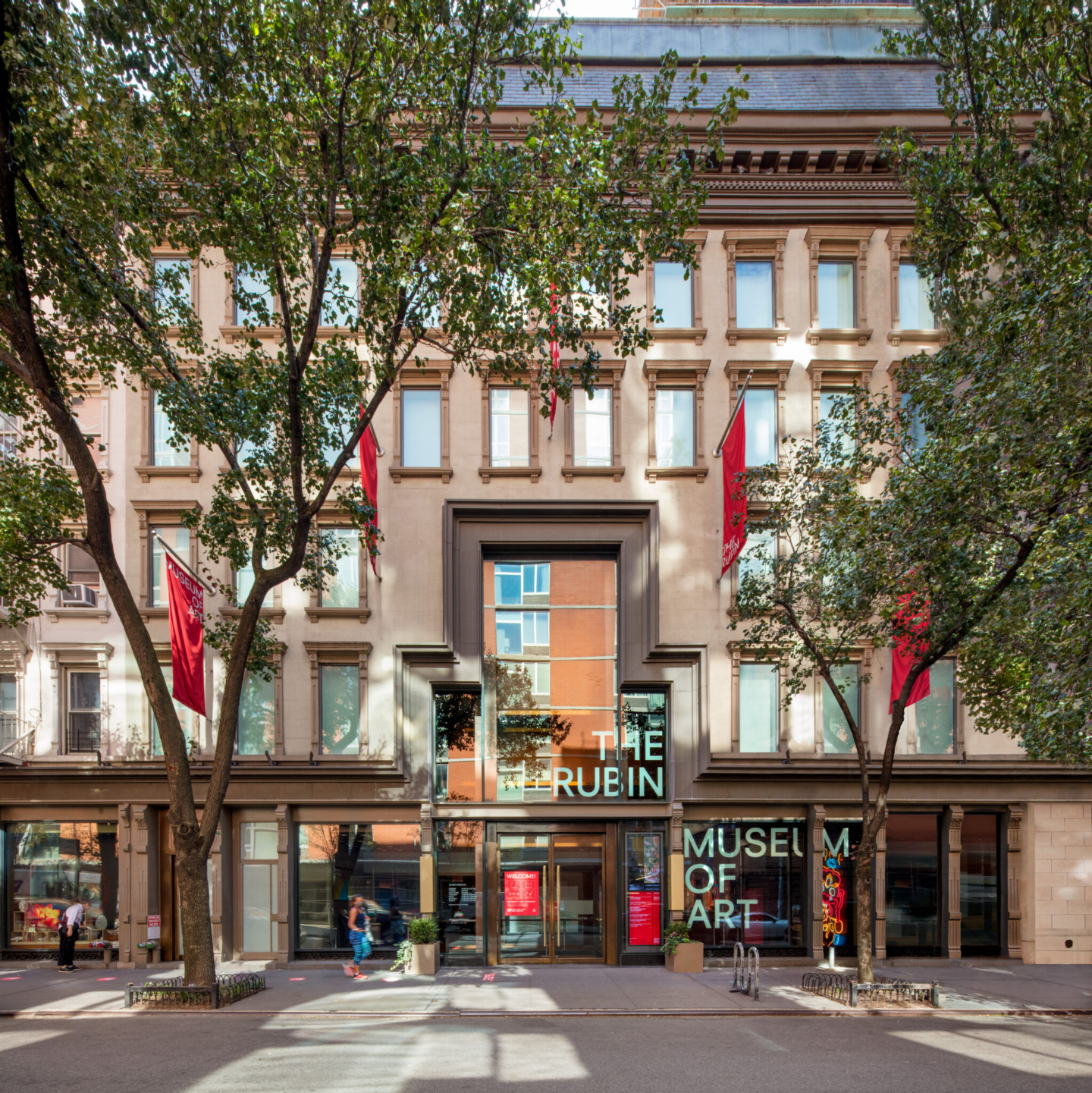
The Rubin Museum of Himalayan Art in New York City is now a global museum, a Museum without Walls.
Their website unlocks a treasure trove of Himalayan art, stories, learning resources, publications, podcasts, and other digital resources.
Member discussion